The IITS AI curriculum
IITS is the schools AI education brand of China MIIT Publishing and Media Group. It is built for use inside schools, and combines general-education courses, an AI laboratory, after-school provision, and assessments and competitions into one framework. It was developed by university specialists together with school educators, uses the assessments as its exit qualification, and spans primary through senior secondary.
The course framework
The courses cover programming, computing, engineering and science, from the youngest years to senior secondary, in three strands: programming, artificial intelligence, and science and technology literacy. Each strand offers teaching, activities and competitions, taking a student from first encounter with AI, through general fluency, to advanced work — building logical thinking and problem-solving alongside imagination and the pleasure of making something.
| Stage | Type | Programming | Artificial intelligence | Science & technology literacy |
|---|---|---|---|---|
| Pre-school ages 4–6 | Teaching | Screen-free programming: 2 years | First look at AI: 1 year | Science literacy: 1 year |
| Activities & contests | Showcase events and study tours | |||
| Primary ages 6–12 | Teaching | Screen-free programming: 2 years Block programming: levels 1–3 | AI foundations: 4 years AI assessment: levels 1–4 | Science literacy: 3 years |
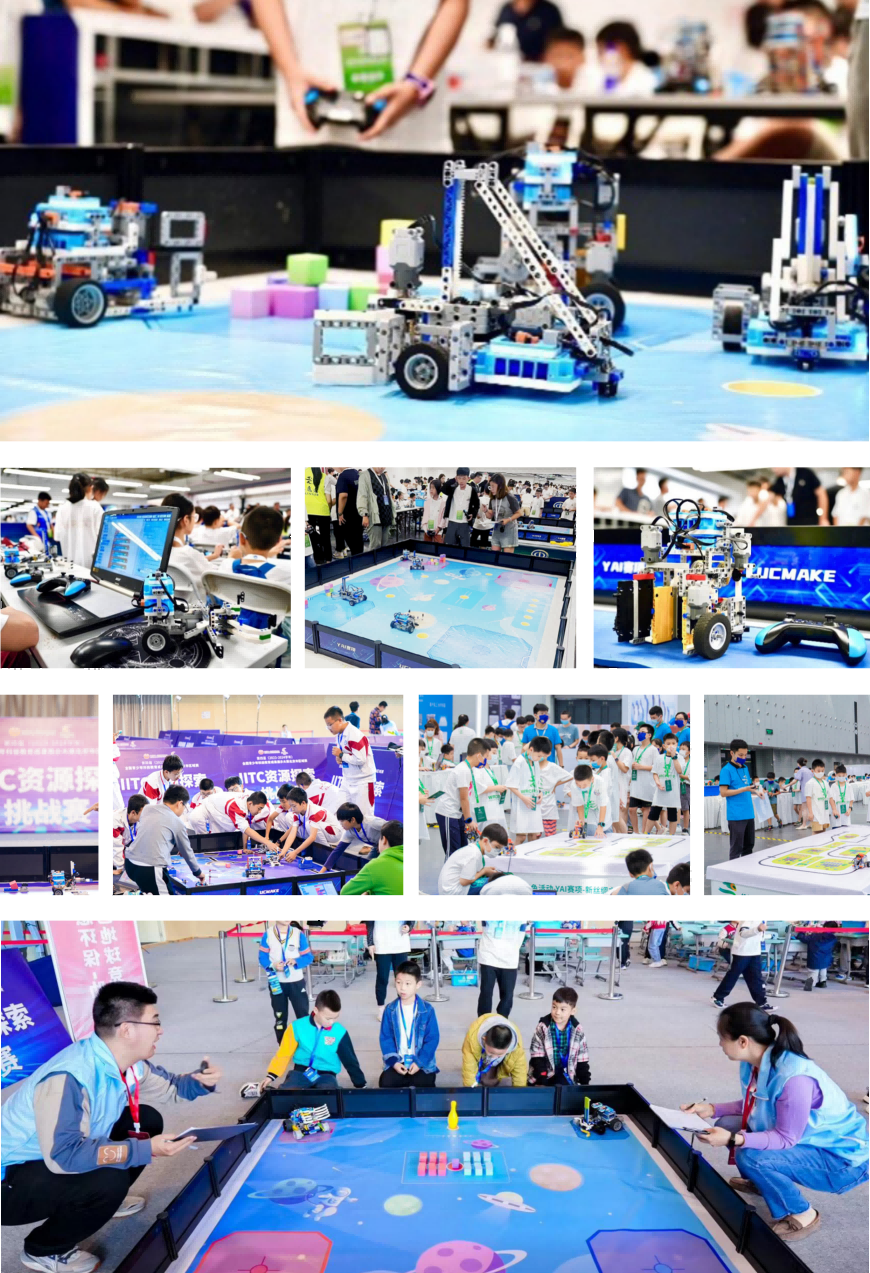
| Activities & contests | Nationally approved contests (with matching kits) | Showcase events Study tours | ||
| Junior secondary ages 12–14 | Teaching | Python: levels 4–6 C++: levels 4–5 | AI assessment: levels 5–6 | Science literacy: 1 year |
| Activities & contests | Nationally approved contests (with matching kits) | Showcase events Study tours | ||
| Senior secondary ages 15–18 | Teaching | Programming technique: levels 7–8 | AI assessment: levels 7–8 | Science invention study course |
| Activities & contests | Future technology talent programme | — | ||
| Assessment | Certification | Youth Screen-Free Programming Proficiency Test Youth Artificial Intelligence Programming Proficiency Test | Youth Artificial Intelligence Technology Proficiency Test | Youth Science and Technology Literacy Test |
The programme as a whole


Teaching, learning, research, assessment and training
Five strands — teach, learn, take part, assess, train — so that a child grows steadily through the programme.
1Teaching
Course resources
- Artificial intelligence series
- Programming series
- Science literacy series
Laboratory
- School AI laboratory
Platforms
- After-school platform
- Resource management
- Events platform
2Learning
Learning kits
- AI discovery kit
- Screen-free programming kit
- Science literacy kit
- Assessment kit
- AI contest kit
Platforms
- After-school platform
- Events platform
3Activities and contests
Approved contests
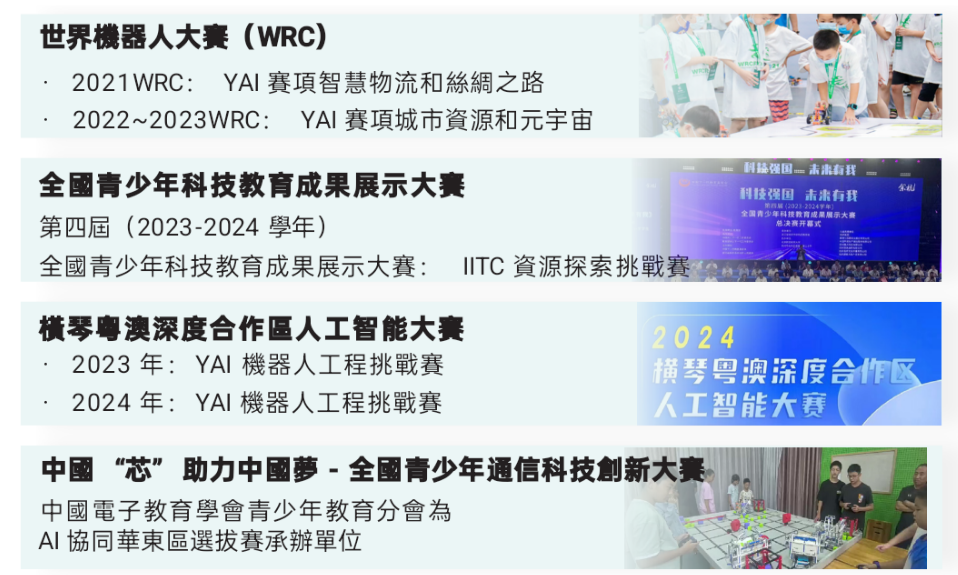
- Youth Science Contest, China Core, WRC
Regional contests
- Education-media and science-association events
Showcases
- Science education showcase
Study tours
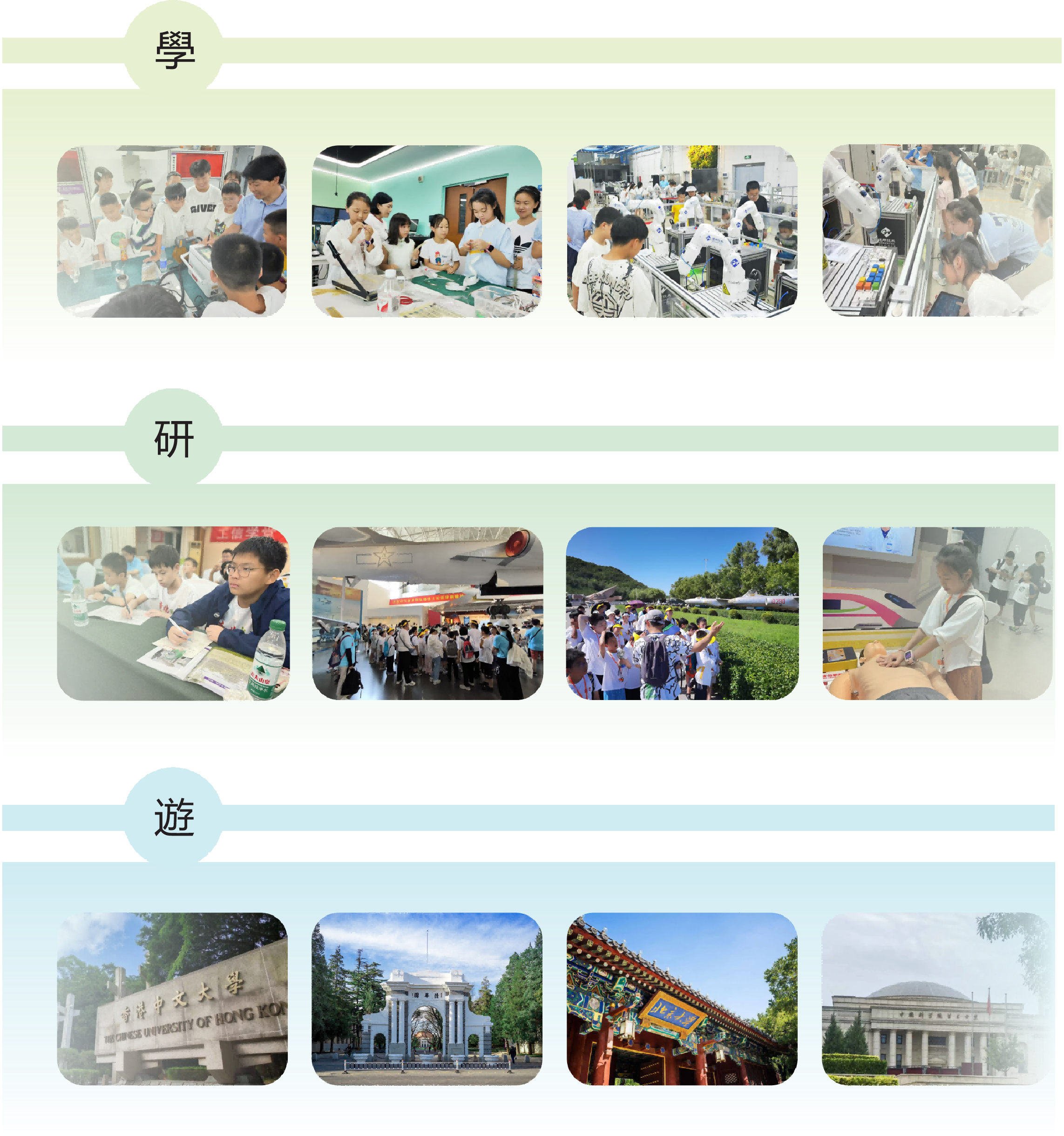
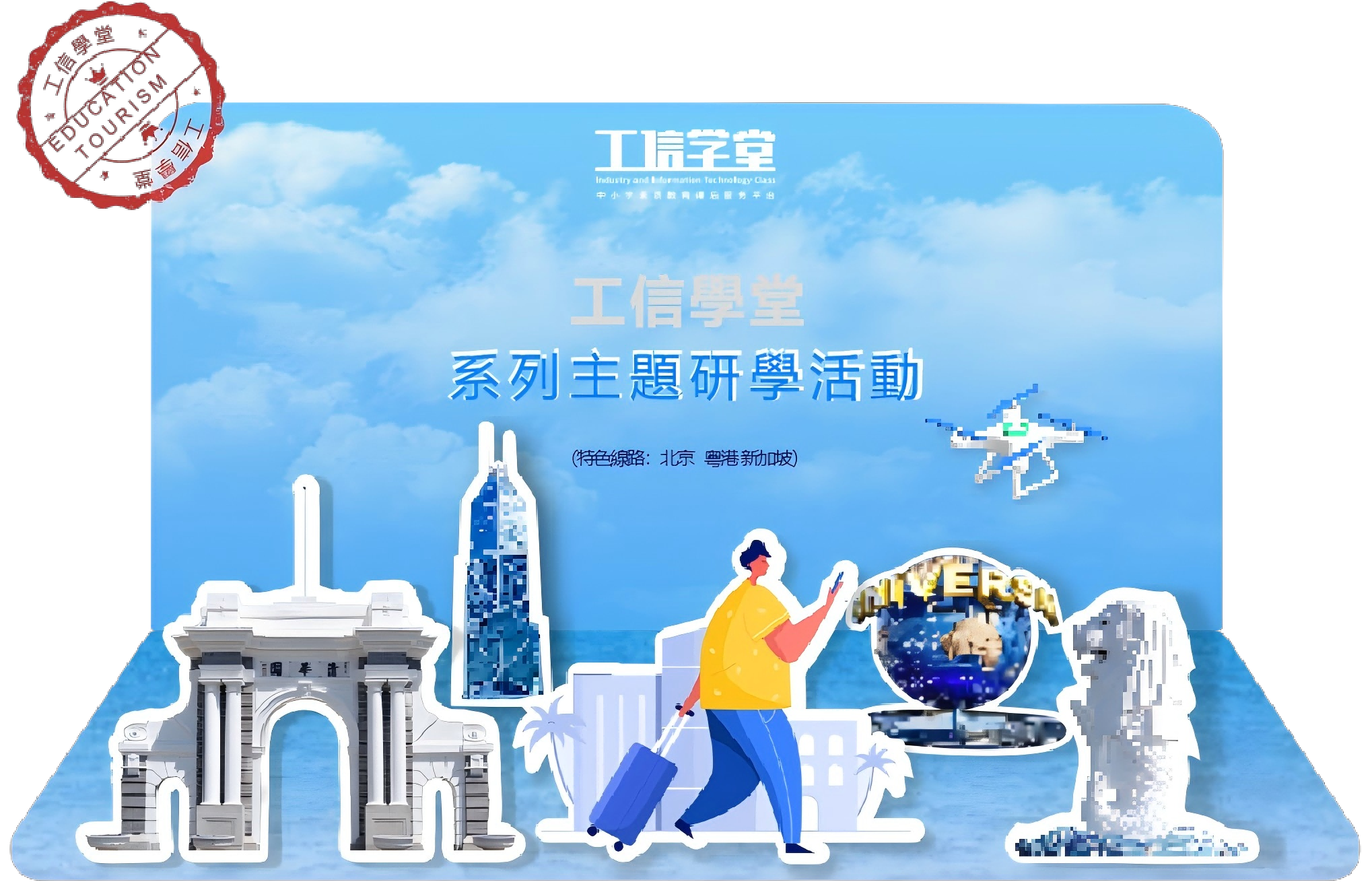
- University and technology study tours
Expert endorsement
- Jointly signed by university specialists
4Assessment
Independent youth assessment
- Youth Artificial Intelligence Technology Proficiency Test
- Youth Artificial Intelligence Programming Proficiency Test
- Youth Science and Technology Literacy Test
- Youth Drone Technology Proficiency Test
- Youth Screen-Free Programming Proficiency Test
- Youth Algorithm Design Proficiency Test
5Teacher training
Subject training
- Artificial intelligence
- Programming
- Screen-free programming
- Science literacy
- Maker skills
- Robotics
Screen-free programming — the E series

| Stage | Entry | Advanced | ||
|---|---|---|---|---|
| Ages | 4–6 | 6–8 | ||
| Step | L1 | L2 | L3 | L4 |
| Lessons | 16 × 45 min | 16 × 45 min | 16 × 45+45 min | 16 × 45+45 min |
| What the child learns | How the screen-free robot works; reading command cards to complete a simple program; recognising everyday objects | Confident basic use; the logic behind planning a route; completing a program unaided | Planning a route using loops and other blocks; designing a simple scene with map tiles; refining a program by testing it | Planning, designing and debugging a route unaided; several themes to build enthusiasm and programming sense; tile design to develop dexterity and computational thinking |
| Kit | Screen-free robot CBE + materials pack CB-E01 | Screen-free robot CBE + materials pack CB-E02 | ||
| Assessment | Youth Screen-Free Programming Proficiency Test / contest options available | |||
Artificial intelligence — the K series
| Step | Code | Topic | Module (suggested year) |
|---|---|---|---|
| L1 | K101 | Creative building | Mechanics K1 Year 1 |
| L2 | K102 | Mechanical power | |
| L3 | K201 | Engineering power | Control K2 Year 2 |
| L4 | K202 | Engineering design | |
| L5 | K301 | Program interaction | Programming K3 Year 3 |
| L6 | K302 | Sensor control | |
| L7 | K401 | Intelligent control | Intelligence K4 Year 4 |
| L8 | K402 | Intelligent design | |
| L9 | K501 | Program control | Design K5 Year 5 |
| L10 | K502 | Applied programming | |
| L11 | K601 | Intelligent algorithms | Algorithms K6 Year 6 |
| L12 | K602 | Applied AI |
Aim
- Built to the new information-technology curriculum standard, covering the key principles of AI so that a student can hold their own in a digital society.
In the classroom
- Worked product cases, carefully refined, so lessons carry real content and remain enjoyable — which is what keeps children enrolling.
Content
- Developed by a specialist teaching-research team: coherent across the ladder, rising in a spiral, so progress is felt.
Materials
- Detailed lesson plans and slides with 3D build steps, so the course is straightforward to teach.

Opening young minds, enabling what comes next
The framework is built around core competencies and follows how children actually develop: it starts from everyday situations, leans on hands-on practice, and draws across subjects. The aim is practical AI skill, inventive thinking, a critical eye and a sense of responsibility — offered as a system that other schools can adopt and adapt.